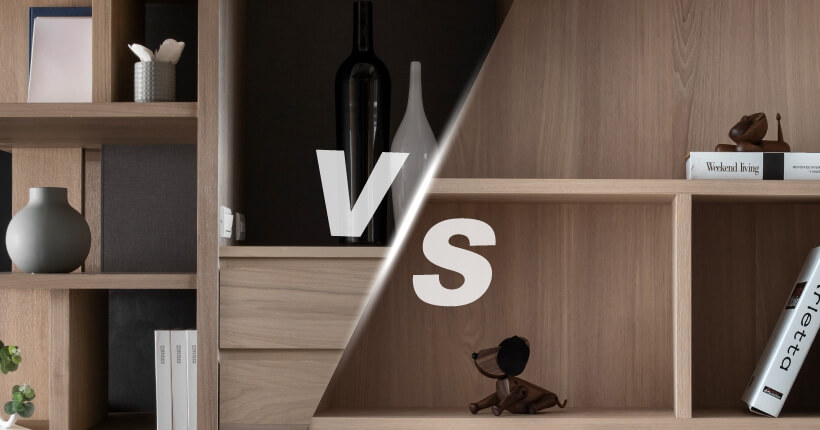
What is HPL(High-Pressure Laminates)?
High-pressure laminate (HPL) is a versatile and durable surfacing material commonly used in interior design and construction. A high-pressure laminate board is composed of multiple layers (normally 6 to 8 sheets) of kraft paper infused with synthetic thermosetting resin and a decorative paper layer, all bonded together under high heat and pressure (usually exceeding 1,000 PSI).
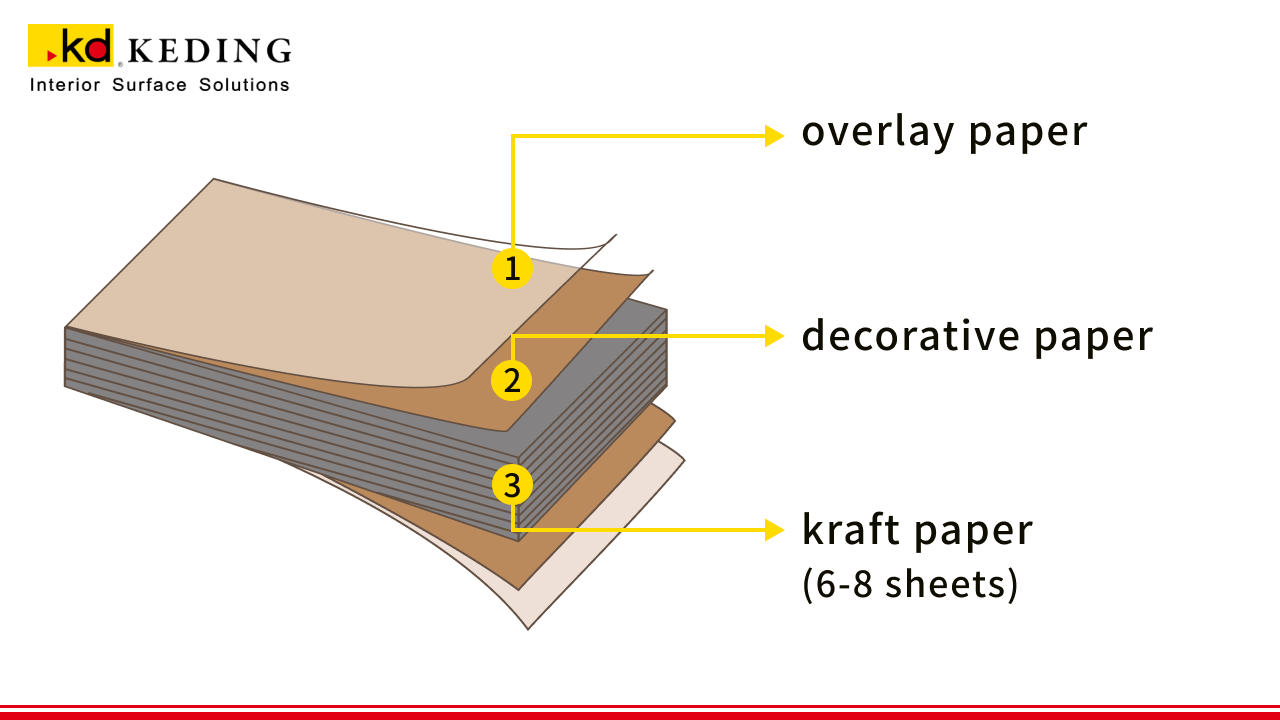
The result is a strong, flexible, resilient, and visually appealing material that can mimic various textures, like wood and marble, patterns, and colors, making it ideal for applications such as furniture, countertops, and wall cladding, suitable for both residential and commercial settings.
Typical high-pressure laminate (HPL) panels have a thickness ranging from 0.71 to 1.22 mm, while thickness variations exist in other laminate types based on their features and applications. Postforming HPL demonstrates flexibility around curved edges when subjected to heat, with a maximum thickness of approximately 0.97 mm. On the other hand, Back HPL is manufactured without a decorative surface, resulting in a thinner profile.
HPL Manufacturing Process
Laminate sheets undergo two main manufacturing processes: high pressure and low pressure.
Low-pressure laminates, often referred to as melamine boards, consist of a single-wear layer and decorative sheet compressed under low pressure and high temperatures. While customizable, they are less durable and cheaper.
High-pressure laminates are carefully crafted by layering kraft paper and bonding it with strong melamine and phenolic resins. This layered mix is then put under high pressure (more than 1,000 PSI) and heat. During the curing process, thanks to the nature of these resins, they transform into sturdy plastic, creating a tough and durable high-pressure laminate sheet. The irreversible bonds formed during this process are a key factor in making HPL exceptionally long-lasting.
HPL Benefits
High-pressure laminates (HPL) offer a versatile and durable solution for various applications, here’s a comprehensive look at what makes HPL stand out:
- Superior wear resistance: The outermost layer acts as a shield to protect against impacts, scratches, and abrasions while keeping the original vibrant color and patterns alive.
- Heat resistance: While not suited for extreme heat, HPL can withstand moderate temperatures up to 135°C or 275°F for sustained periods.
- Low heat conduction: Enjoy consistent comfort, as HPL minimizes heat transfer, keeping surfaces comfortable to the touch regardless of high temperatures.
- Minimal maintenance: Smooth surface effortlessly repels dirt and moisture, making it exceptionally easy to clean and maintain, contributing to a cleaner and hygienic anti-bacterial environment, ideal for high-traffic areas.
- Desired appearance: Achieve the realistic textures and finishes of premium materials at affordable prices. HPL can be crafted to mimic the appearance of wood, stone, and other special materials.
- Perfect Adaptability: Versatile installation options, whether vertical or horizontal, make it suitable for a wide array of tailored needs and various locations.
HPL Applications
Decorative high-pressure laminates find widespread use in various applications, perfect for vertical, horizontal, curved, and cylindrical surfaces, making them a preferred choice for interior designs. Common suitable applications include:
- Residential Interior: Enhance the aesthetics of homes by using HPL for walls, partitions, ceilings, floorings, and other interior fitting.
- Furnishings: Transform the appearance of furniture, including pieces like TV consoles, cabinets, shelves, countertops, benchtops, and so on.
- High Hygiene Environment: Due to their easy-to-clean nature, ideal for areas with high hygiene requirements, such as laboratories, hospitals, and kitchens.
- Commercial Spaces: Commonly employed in retail outlets, clinics, or even store and fair construction, and other commercial settings.
Dark/Pure Core Series (HPL) vs. Solid Core Series (formerly ECO⁺ Laminates)
| Dark/Pure Core Series (HPL) | Solid Core Series (formerly ECO⁺ Laminates) | |
| Construction | Rigid multilayer structure for enhanced durability | Flexible food-grade PP solid-core construction with consistent color throughout the material |
| Key Benefits | High scratch, impact, and wear resistance with clean edge finishing | Excellent flexibility for curved and rounded applications without the edge-chipping concerns |
| Best For | Commercial interiors, high-traffic spaces, cabinetry, furniture, and large-scale projects that require a practical balance of durability, appearance, and cost efficiency | Curved surfaces, rounded details, custom furniture, residential interiors, and design-focused projects requiring greater flexibility and seamless-looking edges |
| Edge Appearance | Dark Core: Distinctive black edge after cutting. Pure Core: Color-matched edge with reduced visible dark lines. | Continuous core color for a seamless-looking finish. |
| Design Options | Wide range of colors, patterns, and textures across both series | Available in a wide range of realistic wood, stone, and solid-color designs with detailed textures and coordinated core colors |
The Dark/Pure Core Series is designed as traditional HPL, offering a durable multilayer construction that delivers excellent scratch, wear, and impact resistance for demanding commercial and public spaces. The Dark Core Series (black-edge) features a traditional black core, delivering reliable durability and a distinctive dark edge after cutting. The Pure Core Series (color-matched core) uses a color-matched core to reduce visible dark edges and create a cleaner, more refined finish for cabinetry, furniture, and detailed interior applications. They are also a practical, cost-effective choice for projects that need to balance reliable performance with budget considerations.
The Solid Core Series, on the other hand, prioritizes design flexibility. Its PP solid-core construction features the same color throughout the material, allowing for cleaner exposed edges, easier fabrication, and greater flexibility for curved and rounded surfaces while reducing the risk of edge chipping often associated with rigid laminates. It also offers reliable scratch, wear, stain, and moisture resistance for easier everyday maintenance. With a wide variety of colors and textures, it is well suited for residential interiors, custom furniture, and projects that emphasize seamless aesthetics.
These product categories provide durable decorative surface solutions, but they are optimized for different applications. The Dark Core and Pure Core Series are practical choices for projects that prioritize HPL durability, commercial performance, and cost efficiency; while the Solid Core Series is better suited for projects requiring greater flexibility, curved applications, and color-through-core design.
Click below to discover more of Keding’s laminate designs and projects!
Keding – Your Best Laminates Manufacturers
Looking for an alternative to traditional HPL panels? Explore KD Decorative Collection (Solid/Dark/Pure Core Series), featuring a durable multilayer construction, excellent scratch and wear resistance, and refined edge finishes. Available in both black-edge and color-matched core designs, it provides a practical solution for commercial and residential interior projects. Contact us today or browse our collection to find the right design for your space.
Relative Reads
>> Laminates for Kitchen Cabinets: Types, Benefits & Design Ideas – Keding
>> Why Use Laminates on Walls & Design Ideas for Wall Laminates – Keding
>> What is Melamine Board vs Plywood vs MDF: Benefits & Uses – Keding
>> What is Wood Veneer: Benefits, Uses, Types & How to Choose – Keding